

D r a i n a g e s o l u t i o n s
Common drainage solutions
Not every drainage problem needs the same fix. Here's a plain-language guide to the most common interventions we use in Western North Carolina — what they are, when they make sense, and what installation looks like on a real property.
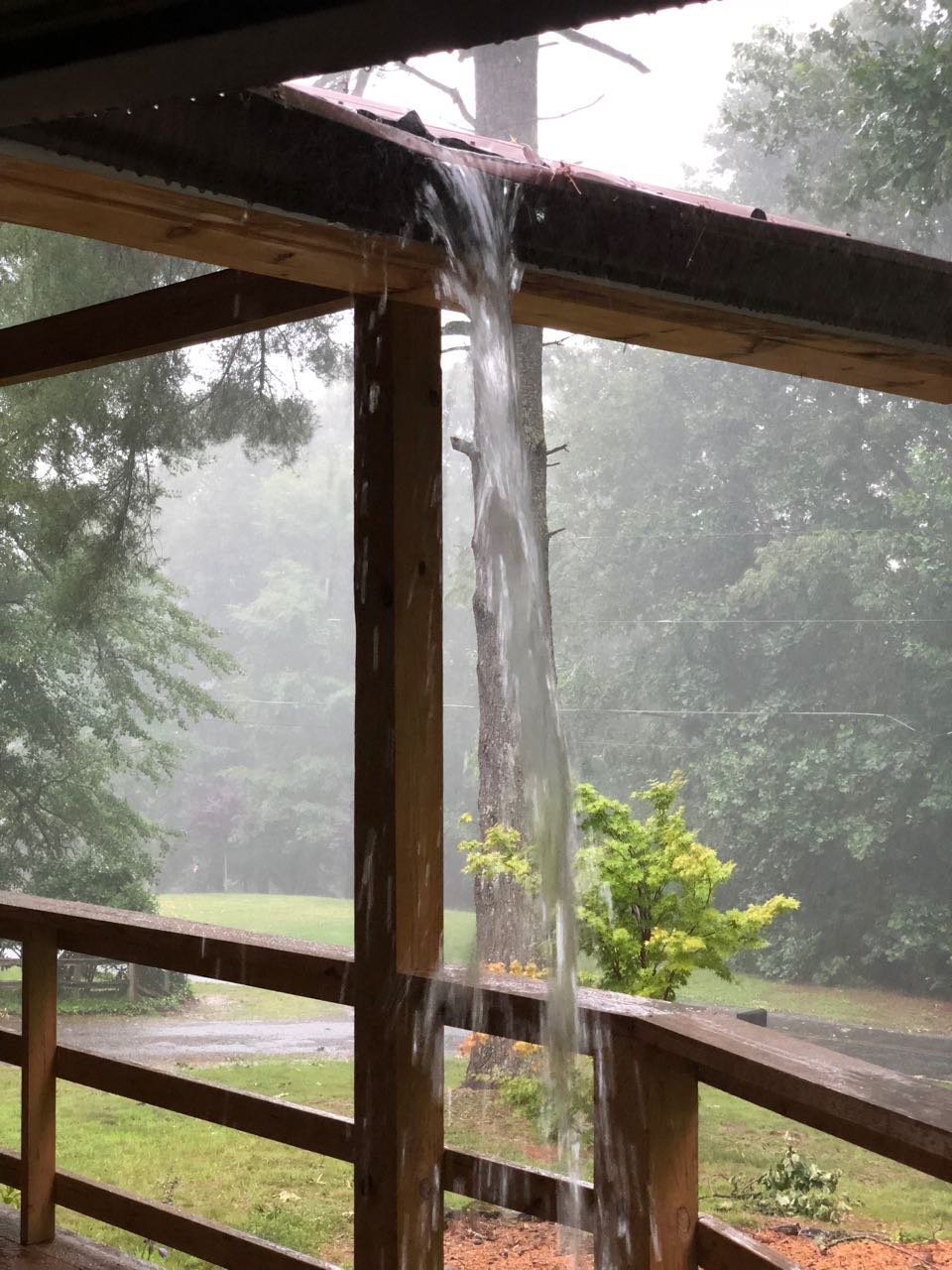
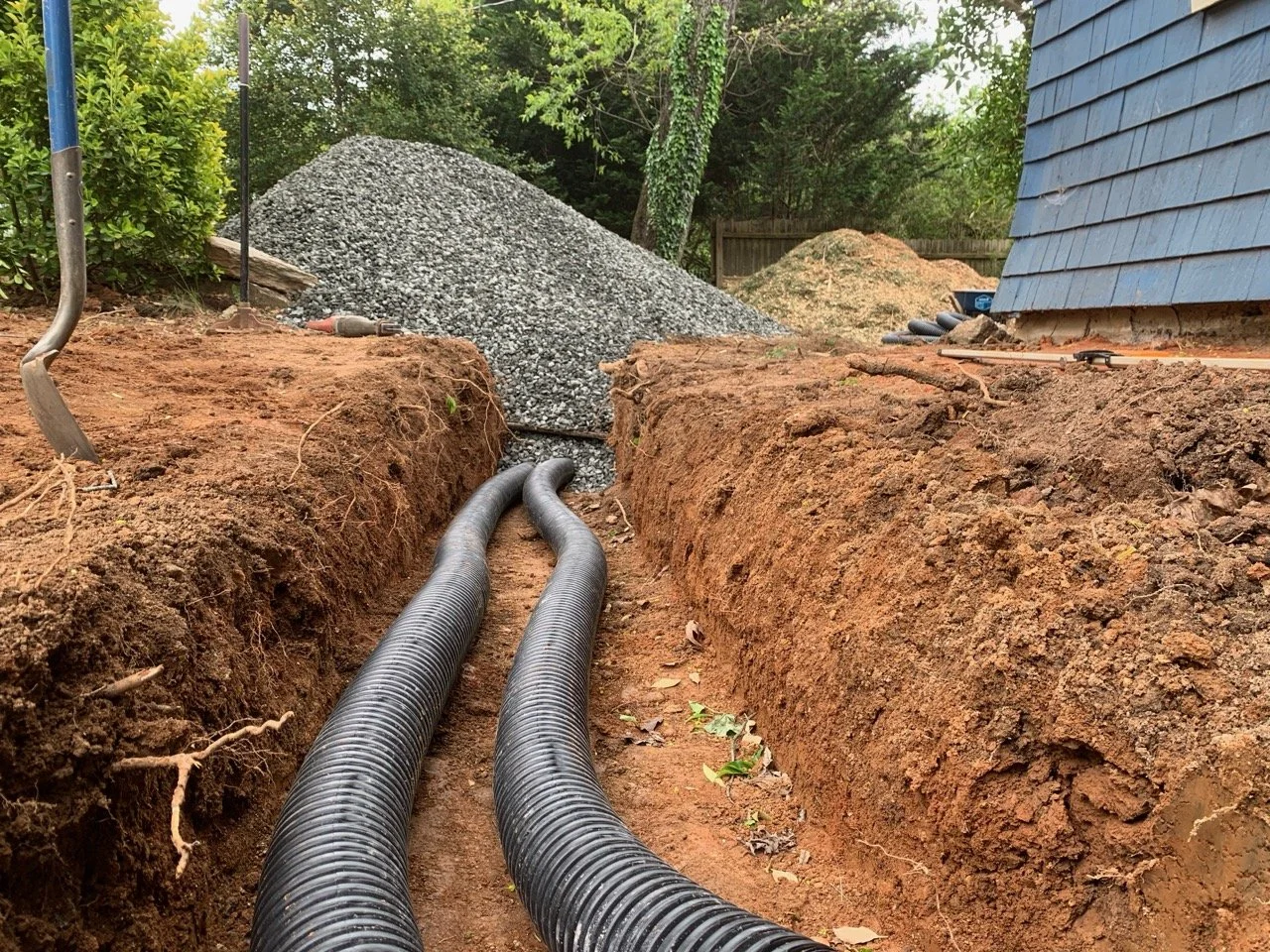
French Drains
The workhorse of residential drainage.
A french drain is a gravel-filled trench with a perforated pipe at the bottom that collects groundwater and surface runoff and redirects it away from problem areas. It's one of the most versatile drainage solutions available — effective for soggy yards, foundation seepage, hillside drainage, and anywhere water is pooling where it shouldn't.
French drains are also one of the most over-prescribed solutions in the drainage industry. Because they're well known and straightforward to install, they get recommended for situations where they're not the right fit — or where a simpler, less expensive intervention would work better. We assess every property before recommending anything, and we'll tell you honestly if a french drain isn't what your situation calls for.
Installation involves digging a trench along the path water needs to travel, laying perforated pipe wrapped in filter fabric, backfilling with clean gravel, and routing the outlet to a safe discharge point. Done right a french drain is invisible from the surface and lasts for decades.
When you need one:
Standing water in your yard that doesn't drain within 24 hours of rain
Water seeping into a basement or crawl space
A soggy area along a foundation, driveway, or slope
Saturated soil that's killing grass or plants
Catch basins
When surface water needs somewhere to go.
A catch basin is a grated inlet that collects surface water and channels it into an underground pipe system. Think of it as a drain for your yard — water flows in through the grate, collects in the basin, and exits through a pipe to a safe outlet point.
Catch basins are ideal for low spots where water naturally collects, at the base of slopes, or anywhere runoff concentrates and has nowhere to go. They're often used in combination with french drains and downspout drainage systems as part of a complete yard drainage solution.
When you need one:
A low spot in your yard that collects water after every rain
Water pooling at the base of a slope or retaining wall
A driveway or patio that drains toward your house
An area where multiple drainage paths converge


Dry creek beds
Drainage that looks like it belongs there.
A dry creek bed is a rock-lined channel designed to carry stormwater runoff across a property during rain events and look like a natural landscape feature when it's dry. It's one of the few drainage solutions that actually improves the appearance of your yard.
Dry creek beds work by mimicking the way water naturally moves across a landscape — following the path of least resistance through a defined, stable channel. Properly sized and lined with the right stone, they handle significant water volume without eroding and require very little maintenance.
When you need one:
You have a natural drainage path across your property that's eroding
You want a drainage solution that integrates with your landscaping
You're dealing with concentrated runoff from a slope or roof
You want something that looks intentional rather than industrial
Positive drainage using red clay subsoil
Working with WNC's soil, not against it.
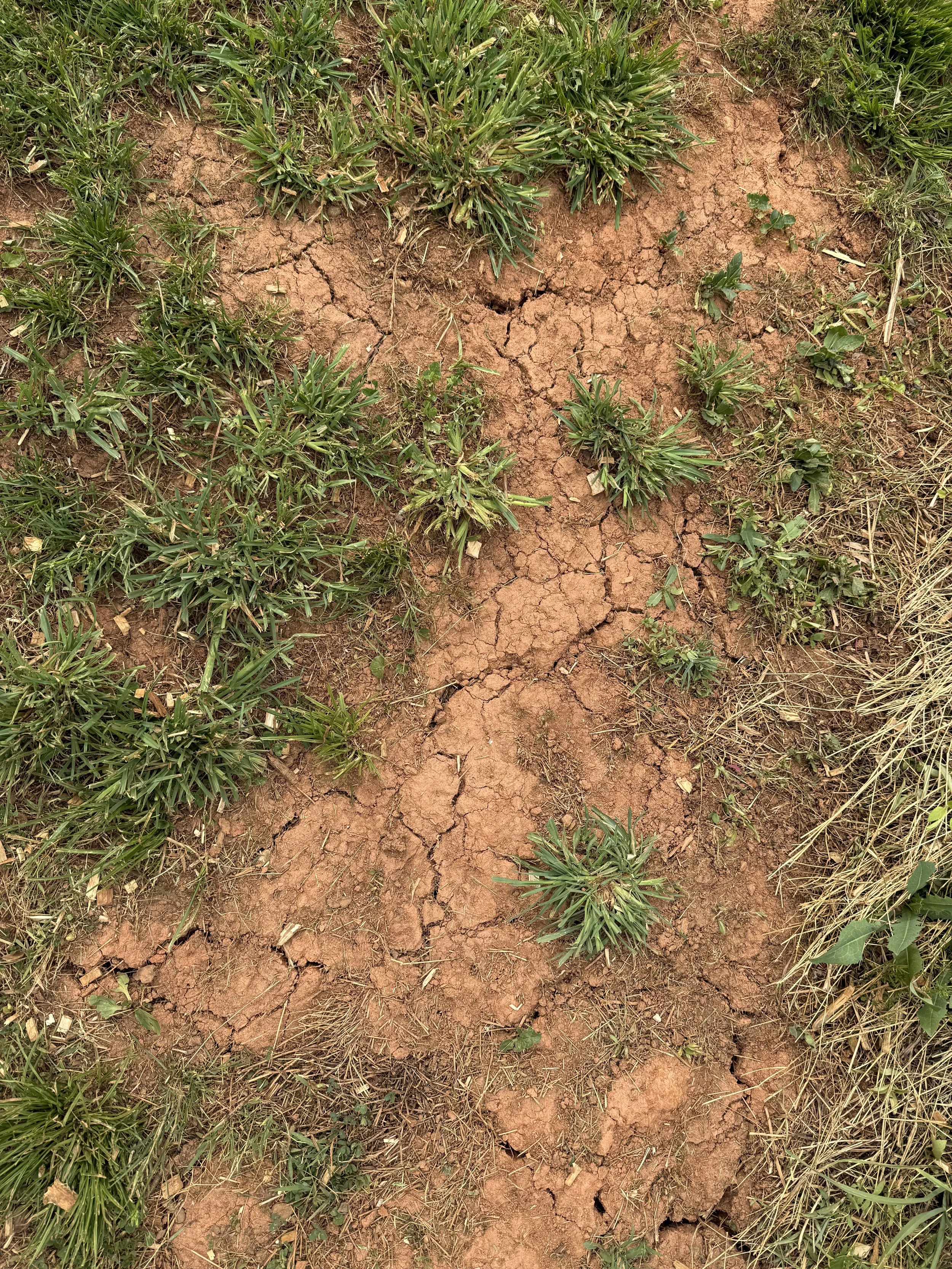
Western North Carolina's red clay subsoil is notorious for poor drainage — water sits on top of it rather than soaking through. But clay subsoil also has a useful property: it can be graded and shaped to direct water precisely where you want it to go.
Positive drainage means grading your property so water naturally flows away from structures and toward safe outlet points. On clay-heavy WNC properties this often means cutting and shaping the subsoil itself — not just the topsoil — to create reliable drainage paths that hold their shape over time. This is one of the most cost-effective drainage interventions available when done correctly, and it's something most drainage contractors overlook in favor of more expensive pipe systems.
When it makes sense:
Your yard slopes toward your house or foundation
Water sheets across your property during heavy rain rather than absorbing
You have clay-heavy soil and recurring drainage problems
You want a low-maintenance solution that works with your landscape

Downspout Drains
Get roof water away from your foundation.
Every time it rains, your roof collects thousands of gallons of water and funnels it through your gutters to your downspouts. Where that water goes when it hits the ground matters enormously — if it's pooling against your foundation, flowing into your basement, or saturating the soil around your house, it's causing slow damage every single rain event.
Downspout drainage systems bury that water underground and carry it away from your foundation to a safe outlet — a pop-up emitter in your yard, a catch basin, or a connection to a larger drainage system. It's one of the highest-value drainage improvements a homeowner can make relative to its cost.
When you need it:
Water pooling against your foundation after rain
Erosion or bare spots below your downspout outlets
A wet basement or crawl space that gets worse during rain
Downspouts discharging onto a patio, driveway, or into a neighbor's yard